I've been having the same argument with the mining industry for more than two years. Faced with AI, most teams instinctively try to build a faster horse: take the process they already run and make it quicker. Automate the search, speed up the comp, shave an hour off the report. I understand the pull. But while you're breeding a faster horse, the smart competitors have stopped tuning the carriage altogether. They've started asking whether they need the horse at all, and they're building a semi-autonomous rocket ship, the diamond-encrusted Lamborghini everyone likes to talk about. A faster horse never catches it.
I read something yesterday that put words to why the faster horse feels so tempting, and why it still fails.
Niels Thomsen, a partner at Artefact, wrote a piece arguing that AI success is 70% human and only 30% technology. Not a throwaway ratio; he anchors it in the work BCG and Wavestone have done on why AI programmes stall. The finding is consistent and slightly deflating for anyone who bought a platform and expected magic: nearly half of AI projects never leave the prototype phase, and when executives are asked why, more than nine in ten blame culture, people and process. Only a handful blame the technology. The machine, it turns out, is rarely the thing that was broken.
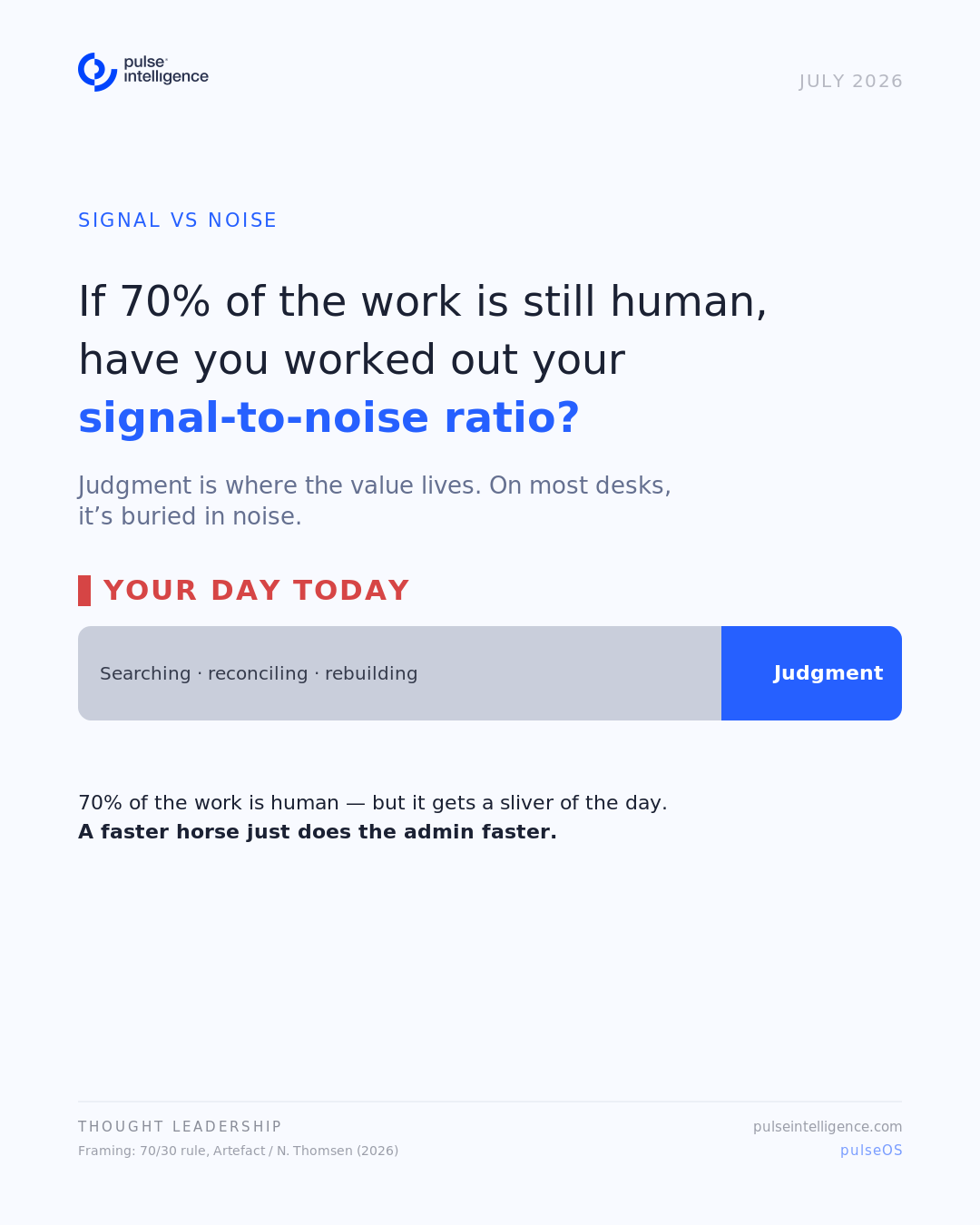
Take that literally for a moment, because I think the literal reading is the useful one. If 70% of the work is still human (the judgment, the interpretation, the sitting-with-a-problem-until-it-makes-sense), then the human was never the part to automate away. The judgment is the point. It always was.
Which raises the uncomfortable question underneath all the AI noise: how much of the day does that 70% actually get?
The judgment is where the value is, and it gets the least time
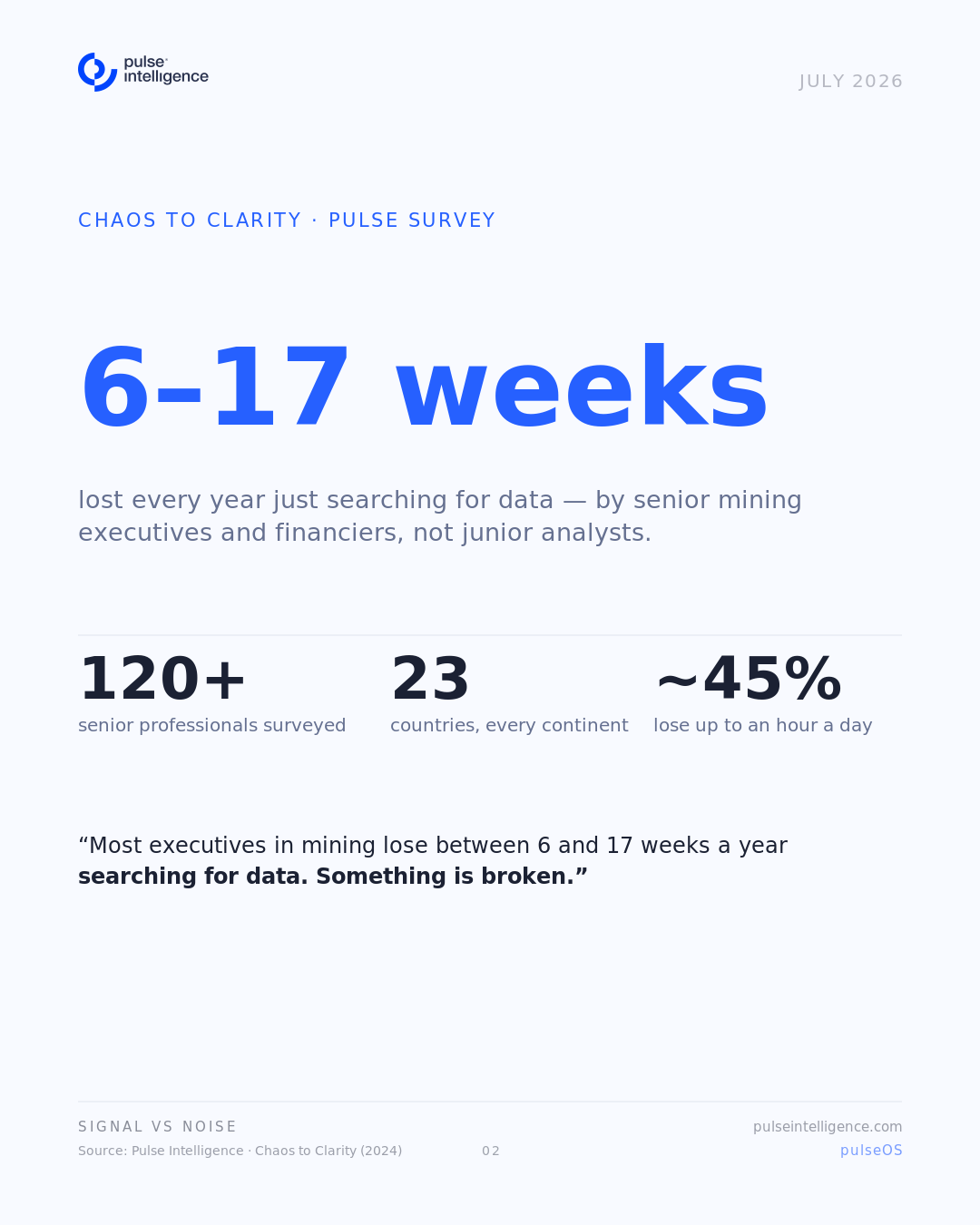
Sit with a mining analyst, a royalty desk, an investment team looking at resource assets, and watch where the hours go. The genuinely valuable work (reading a feasibility study properly, forming a view on a recovery assumption, deciding whether a capital number is credible, comparing an asset today against what it promised a decade ago) is a shrinking corner of the day. The rest disappears into brain-numbing work. Finding the number. Reconciling the two versions of the number that don't agree. Working out which page of which report it came from. Rebuilding the same comparable set for the fourth time this quarter because nobody trusts the last version.
That's the quiet scandal of knowledge work in this sector. The part people are paid for (the 70%) is the part they get the least time to do. Not because they're slow, but because the tax on getting to the judgment is enormous. Every real decision is preceded by an hour of searching for the inputs to it.
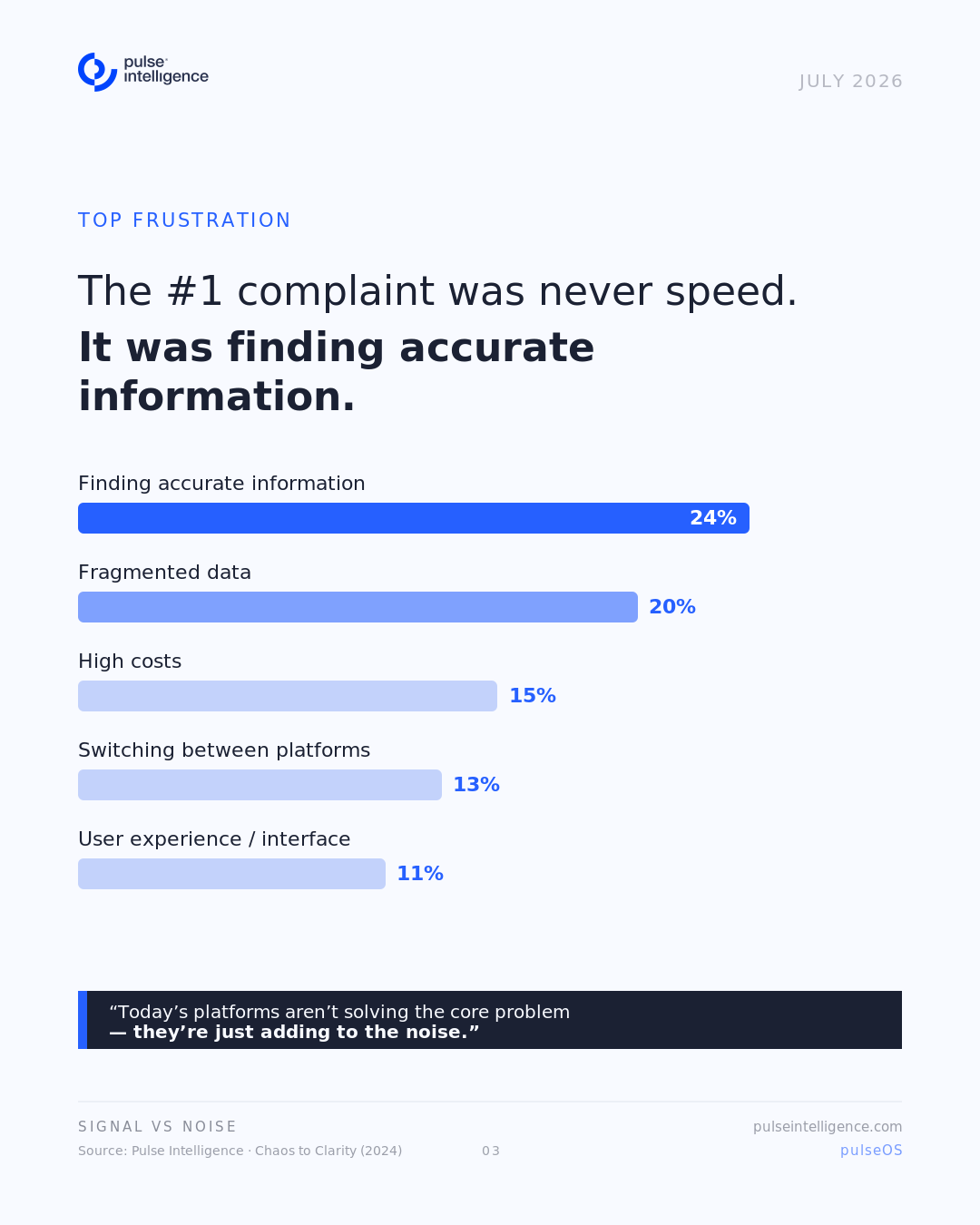
So when I hear "we're not ready for AI," I usually hear something more specific and more forgivable underneath it: we've seen the version of AI that's all engine and no foundation, and we're right not to trust it. Fair. But that's an argument about the wrong 30%. It says nothing about the 70%.
What we're actually optimising: the ratio of the day
Elon Musk optimises for one thing above almost everything: signal over noise. That's the cleanest way I can describe what a working day should be. The signal is your judgment, the read on the asset, the view on the number. The noise is everything you wade through to reach it. In most teams the noise has quietly drowned the signal, and nobody decided that on purpose. Our job is to turn that ratio back the right way up.
Let me be precise about what we're aiming at, because it isn't the thing the fear reflex assumes. We are not trying to take the human out of the work. We are trying to give the human the right conditions (the Goldilocks conditions) to bring their judgment and their experience to bear where it matters most, and to bring it to bear on far more of the opportunities and risks in front of them than a single day currently allows.
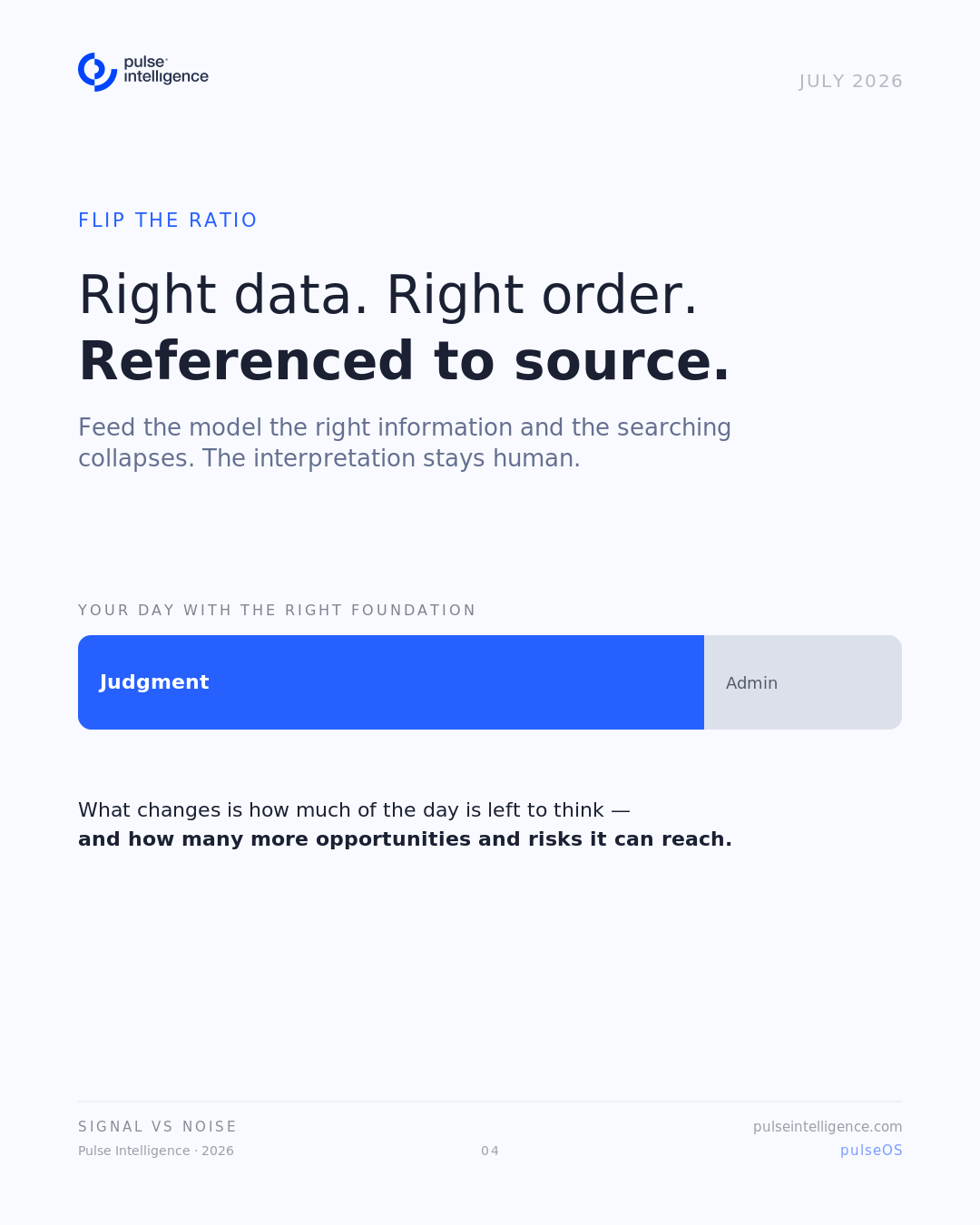
The mechanism is less exotic than the marketing makes it sound. Feed the model the right information, in the right order, on a validated data stack referenced to source, and you change the ratio of the day. Every figure is extracted and traced back to the exact page it came from, decision-ready and auditable, and the searching collapses. We see teams reclaim at least 30% of the day before anyone has typed a single query, on a completely manual workflow, just by removing the tax of going to find things. The interpretation stays human. The reading, the weighing, the actual call: human. What changes is how much of the day is left to do it, and how many assets, comps and risks that judgment can now reach. In this business, that reclaimed judgment is not a soft benefit; it is the thing that decides your financial and professional success.
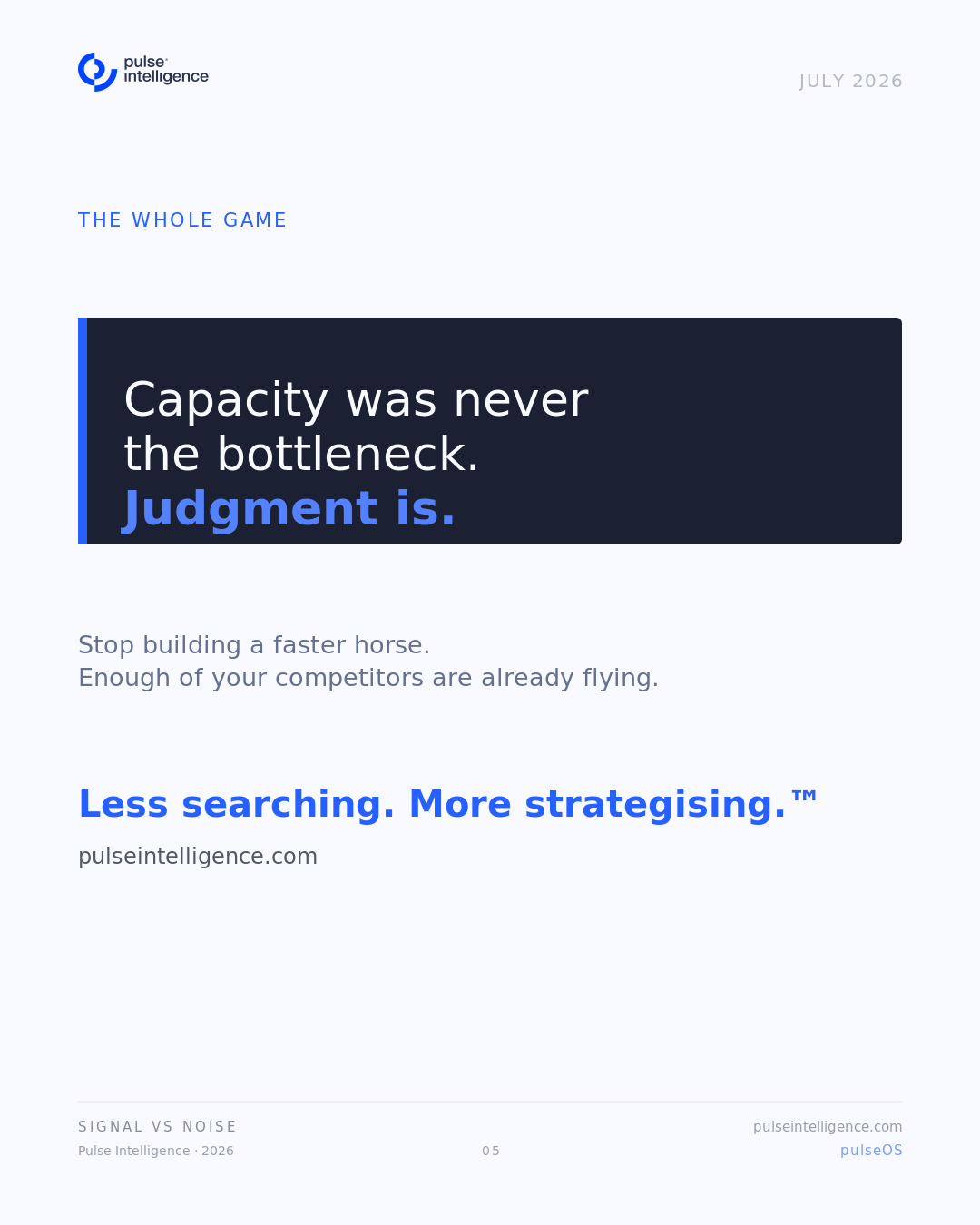
That's the reframe I'd offer against Thomsen's number. If 70% of the work is human, good AI infrastructure shouldn't be trying to shrink that 70%. The goal is to expand the share of the day you get to spend inside it, and to point that expanded judgment at more opportunities and more risks than you could ever get to before. Capacity was never the bottleneck in this industry; there is no shortage of smart people or long hours. Judgment is the bottleneck, and judgment is starved of time.
The Goldilocks condition
There's a version of this that overshoots, too. Give a team raw horsepower with no discipline underneath it and you don't get better decisions; you get faster, more confident errors, and the analyst spends the reclaimed time cleaning up after a machine that made things up. Too little help and they drown in admin. Too much unfounded automation and they can't trust a word of the output. Neither of those is the goal.
The Goldilocks condition sits between them, and it's less exotic than the marketing suggests. It's an analyst who spends most of the day in the analytical space (thinking, comparing, forming a view), and who can trust what's underneath them while they do it, because every number traces to its source and nothing was invented on the way. Not a smarter model bolted onto a broken foundation. A clean foundation that lets an ordinary brilliant person do the part only they can do, for most of the day instead of a sliver of it.
You don't get there by waiting for the technology to be perfect. You get there by starting at the bottom (the boring, referenced, validated data layer), where the risk is low and the payback is immediate, and climbing as your own confidence and your own data earn the next rung. The firms that win the next few years won't be the ones who built a faster horse. They'll be the ones who got the foundation right early, and were already spending their days on judgment while everyone else was still tuning the carriage.
Stop building a faster horse. Enough of your competitors are already flying.
Less searching. More strategising.™
Signal vs Noise: the full 5-slide deck
The complete Signal vs Noise carousel as a PDF, all five slides, ready to share.
Where does your team's data infrastructure sit today?
Answer 10 questions. Get a private diagnostic on your AI readiness, in minutes.
Less Searching. More Strategising.™
See the platform running on real mining data, and what it would look like for your team.