A comp built on FY2025 AISC and production numbers? That's so last year!
CASE STUDY: A corporate development analyst had a peer set for an ASX junior gold producer due by the end of the week.
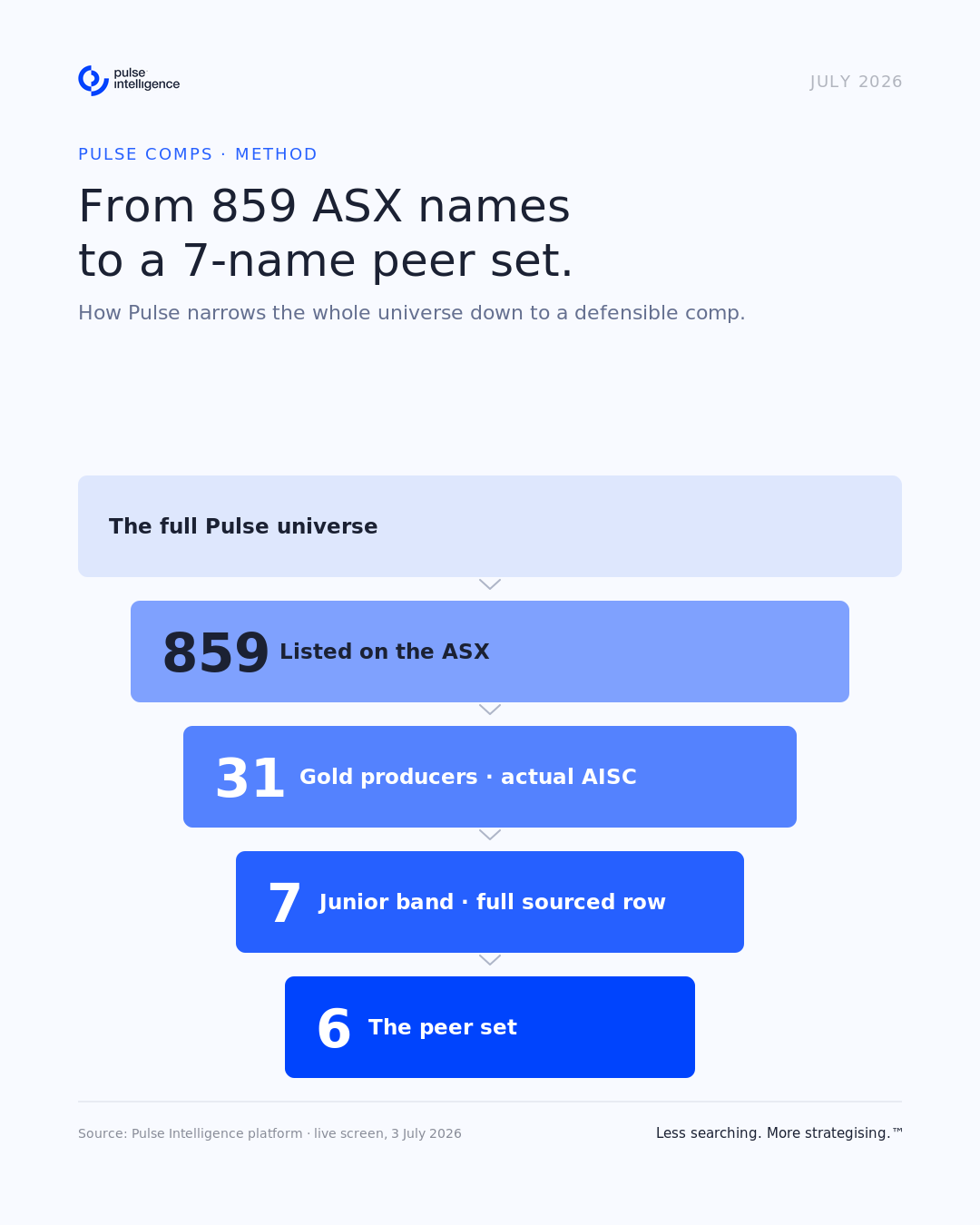
They built it on Pulse in 8 minutes, not the two days it takes by hand. The catch is always the cost line, because a single quarter is not a ranking. Grade, all-in sustaining cost, capital structure, every figure traceable to the filing.
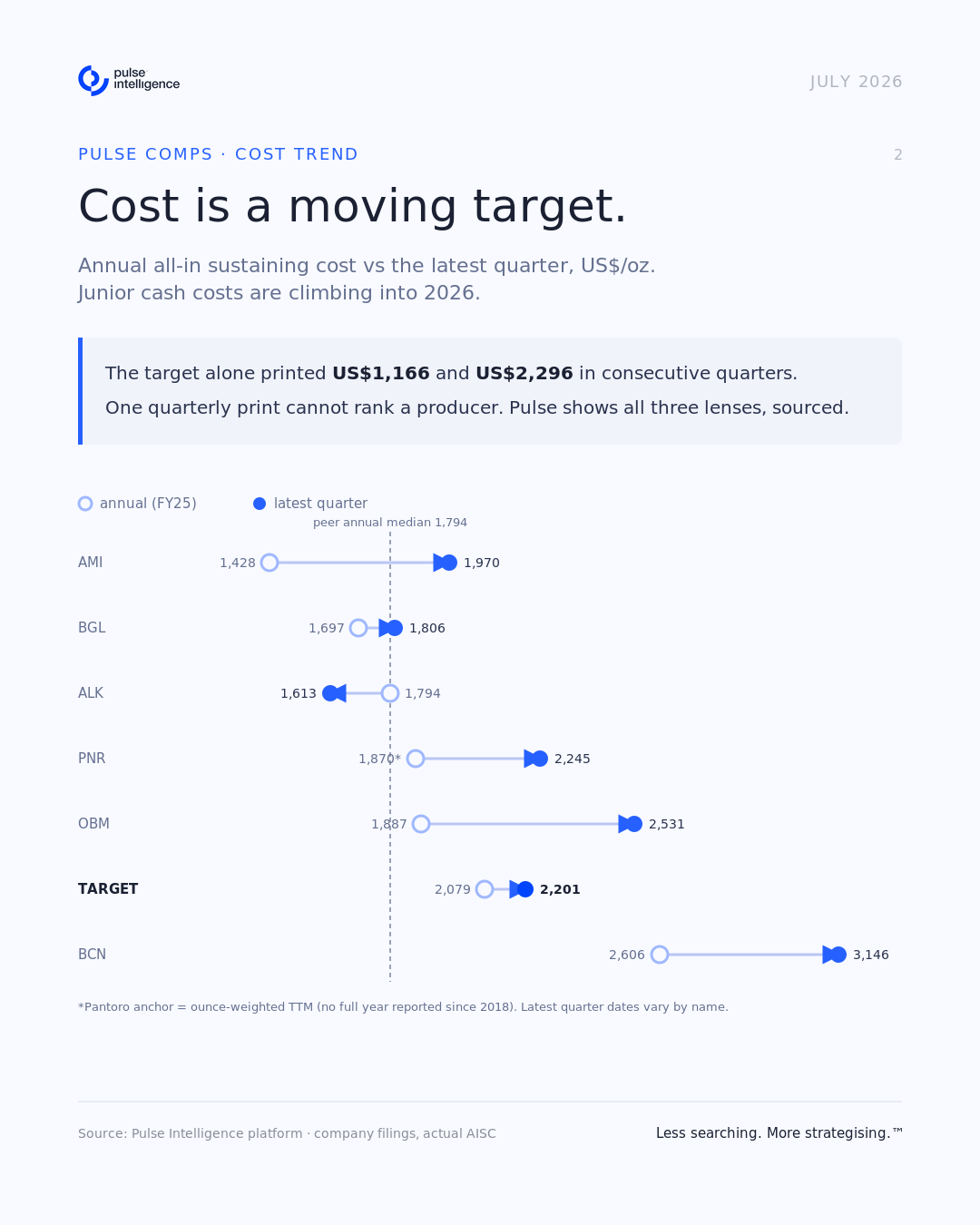
The target's own all-in cost ran from US$1,839 to US$2,296 across last year, and settled at US$2,079 for the full year. Same mine, same twelve months.
So Pulse shows every lens, sourced.
The annual for comparison, the ounce-weighted trailing figure for the current read, the latest quarter for the trend. On the standard annual basis the target runs US$2,079 an ounce, a higher-cost junior. And across the set the trend points one way: junior cash costs are climbing into 2026, Ora Banda up a third of its annual to US$2,531, Beacon past US$3,000.
Then the metric that does not move. Grade.
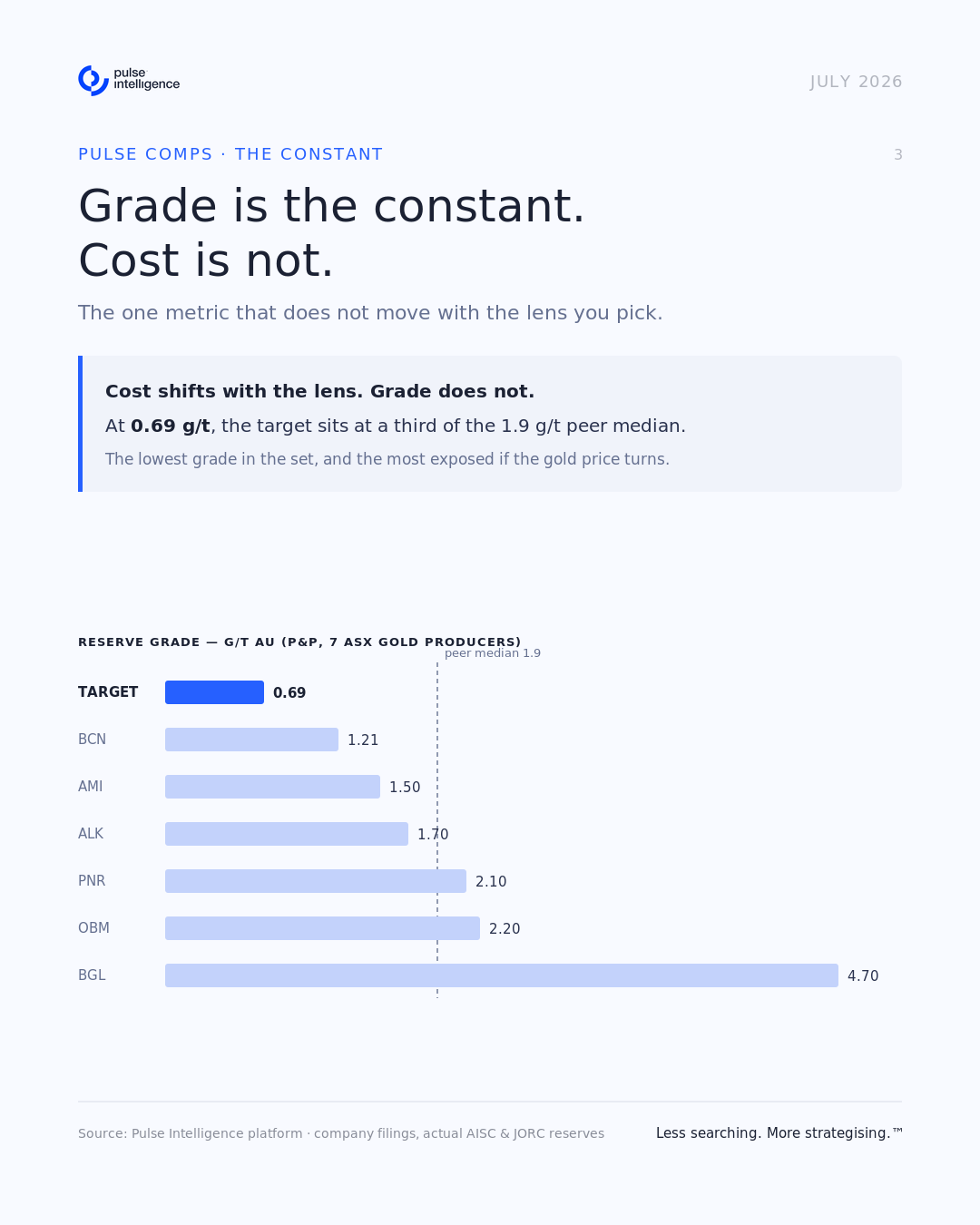
The target's reserve grade is 0.69 grams a tonne, a third of the 1.9 gram peer median. Cost is a snapshot you can argue about. Grade is structural, and it is why this producer is both the higher cost name and the most exposed in the set if the gold price turns.
Two ways to read it.
One: at today's gold price, even a low grade, higher cost producer still clears cash cost, so it screens fine right now.
The other: a sub one gram reserve has only one direction for costs as the easy ounces deplete, and the least room if the price rolls over.
The read it forces: rank juniors on grade and the cost trend, never a single cost print. One quarter tells you almost nothing. The trajectory and the rock tell you almost everything.
And it does not go stale. With Pulse the comp is dynamic. Automate it once and you hold a live version, refreshed as the filings land, and you can pull it straight into your own financial model through the Pulse MCP. Last year's numbers stop being a problem when the comp updates itself.
Source: Pulse Intelligence Partner. ASX gold producers, actual AISC on annual, ounce-weighted trailing and quarterly bases, plus JORC reserve grades, all from company filings, 3 July 2026. Every figure one click from its source.
Less searching. More strategising.™
ASX Gold Producer Peer Comp: the full sourced case study
The complete anonymised case study with the dual-lens comp table, grade analysis, and every figure sourced to the filing.
Less Searching. More Strategising.™
See the platform running on real mining data, and what it would look like for your team.